A clear educational pathway
Four levels, from a first pony ride to competition, so you always know where your child is heading.
For families & riders
At a UDJC Riding School your child learns to ride, to care for horses and to grow in confidence, one clear step at a time. No horse, no experience and no show plans needed.
01 / Why riding?
Riding is a sport, a responsibility and a friendship. The lessons children learn at the barn carry into school, family and everything else they do.
Guiding a horse many times their size shows children what they are capable of.
Grooming, tacking and caring for a horse teach that someone depends on you.
Horses learn at their own pace, and so do riders. Progress comes with time.
Regular lessons and clear goals build focus and good habits.
Every rider has hard days. Getting back on is a lesson for life.
Riders learn alongside friends, trainers and, above all, their horse.
The trust between horse and rider is built on kindness, clear communication and care. Nothing else feels quite like it.
02 / Why choose a UDJC Riding School?
Every UDJC Riding School teaches the same structured curriculum, built on proven international standards, so your child’s progress is clear, correct and never rushed.
Four levels, from a first pony ride to competition, so you always know where your child is heading.
Official Badges mark each milestone against one shared UDJC standard.
Children learn to care for and understand horses, not only to ride them.
Certified schools meet UDJC standards for teaching, safety and horse welfare.
03 / Understanding your child’s progress
Each level has an official UDJC Badge. When your child earns one, you know exactly what they have learned and what comes next.
The youngest riders, ages 3–5
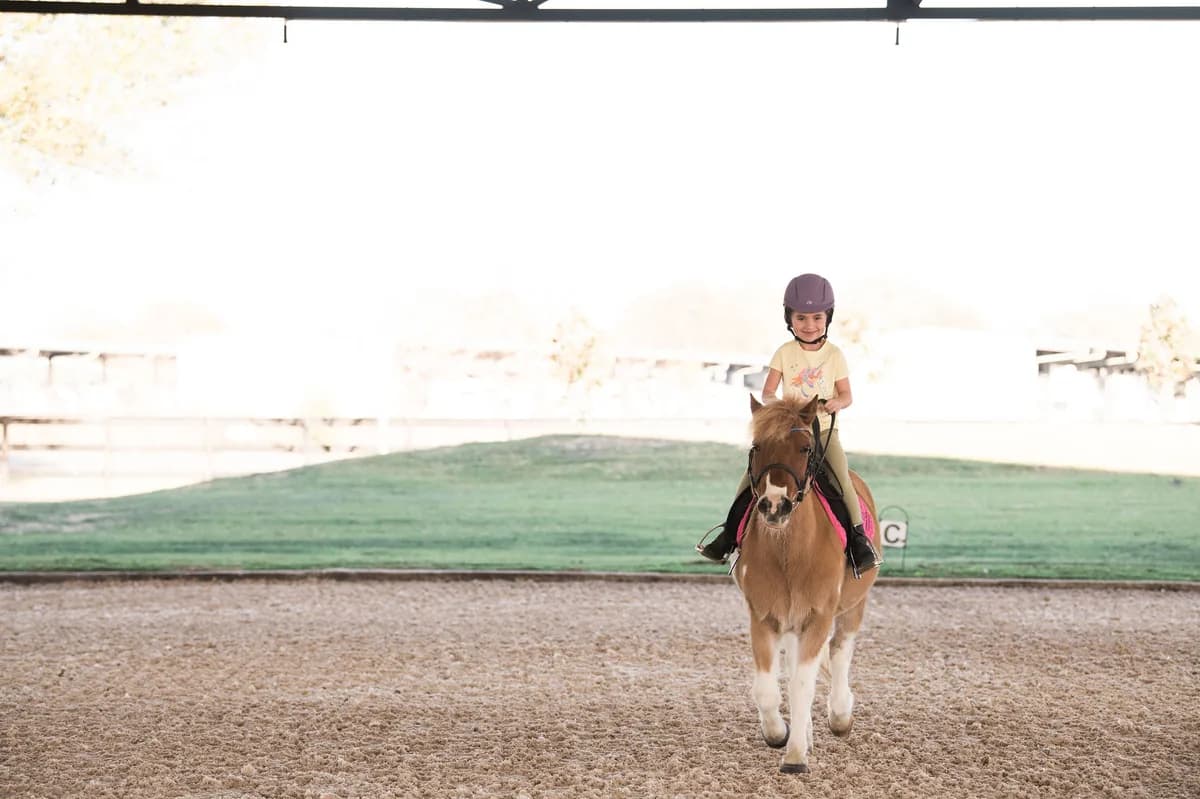
A playful, safe first introduction. Your child learns to be calm and kind around ponies, to groom and lead, and to sit in balance on the lead line.
YOU’LL SEEConfident, gentle and happy around ponies.
The beginner rider
A strong foundation on the lunge line and then on their own: a secure seat, steering and control at walk and trot, and first canter steps.
YOU’LL SEERiding safely without constant help.
The developing rider
Growing independence and rhythm. Riders ride simple dressage patterns, poles and small first fences, and take on more of their horse’s care.
YOU’LL SEERiding a simple pattern or course on their own.
The advanced riding school student
Feel, influence and responsibility. Riders refine their flatwork and jumping, deepen their horse knowledge and prepare for competition.
YOU’LL SEEReady for the UDJC competition pathway.
04 / A positive introduction to competition
Badge Shows are friendly, educational events hosted at your child’s own riding school. They give riders an achievable goal and a real show experience, without asking your family to commit to traditional horse showing.
How a Badge Show works
A clinic designed to develop horse and rider skills.
Certified UDJC judges evaluate riders and award official Badges for what they can show.
Riders who want more can go on to Foundation and Circuit Shows when they are ready. It is always your family’s choice.
See upcoming Badge ShowsQuestions
families ask
first
No. Every rider starts where they are. The school gets to know your child at a first lesson or evaluation, then recommends the right starting level and class.
No. Riders learn on the school’s own lesson horses and ponies, matched to their size and experience.
The youngest riders can start in Unicorn from age 3. Older children, teens and adults begin at Level B, or wherever their experience places them.
There are four levels: Unicorn, B, E and A. Your child moves up when they can show the riding, horse care and understanding each level asks for, and earns an official UDJC Badge along the way. Progress is based on readiness, not on age or time alone.
Each UDJC Riding School sets its own lesson prices and enrollment options, so costs vary by school and by level. Contact the school near you for current pricing.
No. Traditional horse showing is never required. Badge Shows at your own school are a friendly first experience, and your family decides if and when to go on to Foundation or Circuit Shows.
Your school will confirm the details, but every rider needs an approved riding helmet, fitted long pants and closed footwear with a small heel.
Your next step